
FAQ: Everything You Need to Know Before Buying a Houseboat
Buying a houseboat is an exciting journey, but it often raises many questions. Whether you're wondering about financing, maintenance costs, mooring, regulations or everyday life on board, it's important to understand the specific aspects of floating homes before taking the plunge.
At RIVERCOACH, the leading specialist in buying and selling houseboats and floating homes in the Paris region, we have been helping private buyers and professionals acquire residential boats for many years.
This FAQ brings together the questions most frequently asked by our clients to help you better understand the market, the steps involved in purchasing a houseboat, and the many benefits of living on the water.
1. What is the difference between a barge, a residential boat and a houseboat?
In France, the term "barge" generally refers inland cargo vessel that has been converted into a home. A residential boat is a broader term covering all boats designed or converted for living on board, whether they are barges, Dutch barges, Freycinet barges or houseboats. The word houseboat is commonly used to describe boats primarily designed as floating homes.
2. Can you live on a houseboat all year round?
Yes. Many people live aboard their houseboat throughout the year. Modern residential boats offer the same level of comfort as a traditional house or apartment, including heating, hot water, a fully equipped kitchen, bathrooms, bedrooms, air conditioning on some models and connections to utility networks.
3. Do you need a licence to live on or navigate a houseboat?
No licence is required simply to live aboard a houseboat. However, if you intend to navigate, the applicable requirements depend on the type of boat, its size, engine and the regulations in force. Some boats are intended solely for residential use, while others are fully navigable.
4. What costs should be expected when buying a houseboat?
In addition to the purchase price, you should budget for mooring fees, water and electricity consumption, boat insurance, routine maintenance and, depending on the project, renovation or refurbishment work.

5. Are there notary fees when buying a houseboat?
No. Unlike the purchase of real estate, buying a houseboat generally does not involve notary fees, representing a significant financial advantage for buyers.
6. How do you obtain a mooring for a houseboat?
A mooring is subject to the rules of the public waterway authority (such as VNF or HAROPA) or, depending on the location, the private operator of a marina or harbour. A Temporary Occupancy Agreement (COT) is always personal and cannot be transferred from one owner to another. River Coach assists its clients throughout these procedures in collaboration with all relevant authorities and partners.
7. Can you obtain a bank loan to buy a houseboat?
Yes. It is entirely possible to obtain bank financing to purchase a houseboat. We are here to guide and support you throughout the financing process.
8. What are the annual costs of owning a houseboat?
The main annual running costs of a houseboats include mooring fees, insurance, water and electricity consumption, routine maintenance, and any technical inspections or servicing required.
9. Can a houseboat be renovated or extended?
Yes. Many boats can be renovated or refurbished. Some extension projects, such as adding a superstructure or an additional terrace, may also be possible, subject to the necessary approvals and applicable regulations.
10. How does buying a houseboat with River Coach work?
Once your requirements have been defined, River Coach helps you select boats that match your criteria, arranges viewings, advises you throughout the negotiation process and supports you through to completion of the sale. Our assistance also continues after your purchase: we help our clients with all administrative procedures, including COT applications, insurance, financing, shipyards, surveys and renovation work, making it easier to settle into life on board.
11. What are the advantages of living on a houseboat?
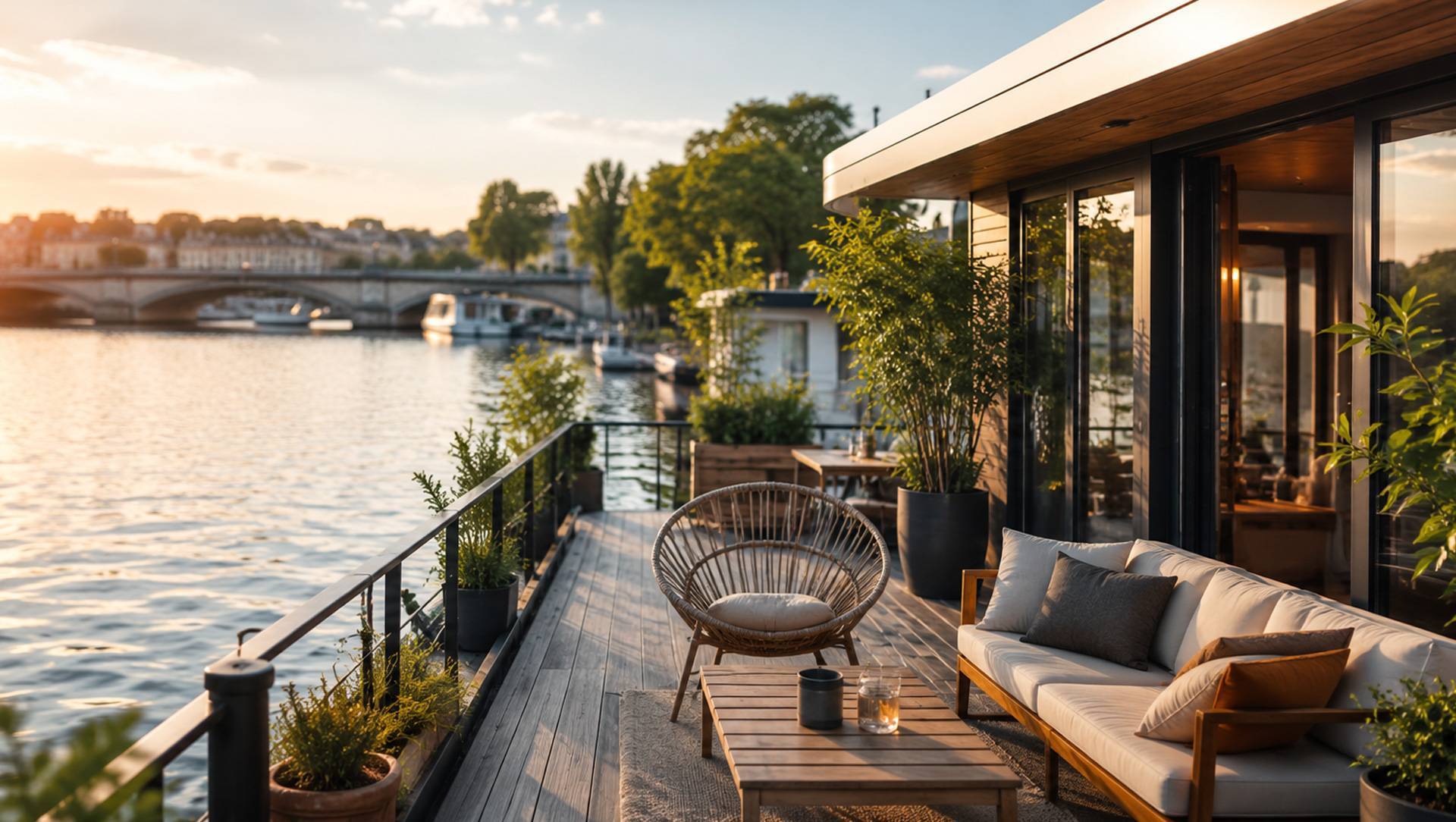
Living on a houseboat offers a unique lifestyle close to the water and nature while remaining within easy reach of urban centres. Outdoor living spaces, natural light, peace and quiet, and the distinctive character of each boat are among the many reasons why buyers choose this way of life.
12. Where can you buy a houseboat in the Paris region?
River Coach offers houseboats, barges and residential boats in many areas throughout the Paris region, including Paris, Boulogne-Billancourt, Saint-Cloud, Neuilly-sur-Seine, Puteaux, Rueil-Malmaison, Le Port-Marly, Maisons-Alfort, Nogent-sur-Marne, Noisy-le-Grand, Saint-Maur-des-Fossés, as well as many other towns located along the Seine and Marne rivers.
Didn't find the answer to your question?
The RIVERCOACH team is here to help with every aspect of your houseboat purchase, whether you're looking for a primary residence, a second home or an investment property.
With our extensive expertise in the Paris region's residential boat market, we provide guidance throughout every stage of your project, from finding the right boat and arranging viewings to financing, regulations, mooring and finalising the purchase.
Feel free to contact us. We'll be happy to answer your questions and help you find the houseboat that best suits your needs.